
How to Build a Portfolio as a Freelance Operations Specialist
You do complex work behind the scenes that keeps teams moving, products shipping, and businesses scaling. Showing that impact in a portfolio is different from showing design mockups or code. This guide teaches you how to translate operational achievements into a persuasive portfolio that wins clients.
Why a portfolio matters for operations freelancers
Clients hire results, not processes. A portfolio proves you deliver measurable improvements in efficiency, cost, uptime, or speed. It also builds trust for tasks that are sensitive, cross-functional, and strategic.
A well-crafted portfolio shortens sales cycles. It gives prospects a clear picture of what you can do and how you work. That clarity converts conversations into contracts.
What to include in an operations portfolio
Case studies that show outcomes
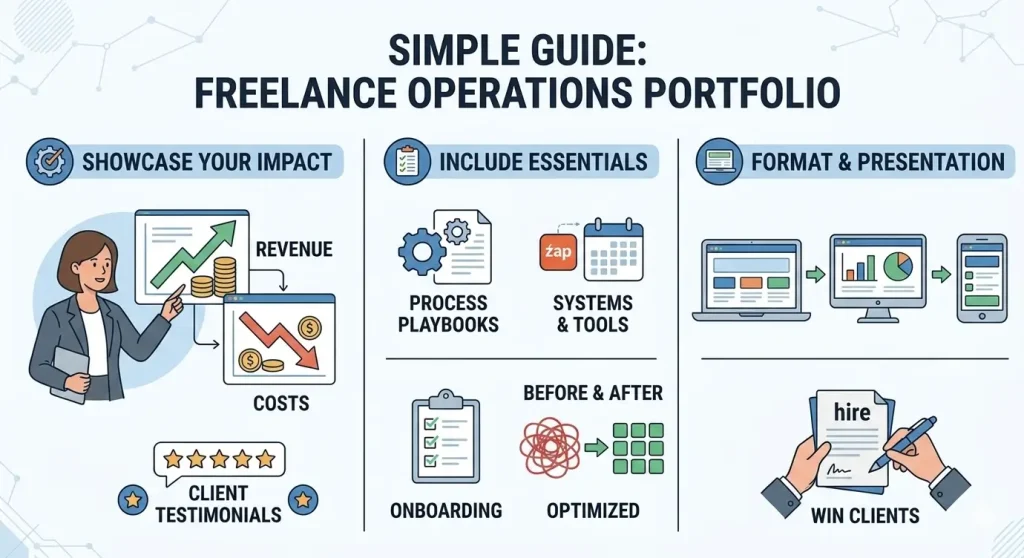
The heart of an operations portfolio is case studies. Each case should tell a concise story: the problem, your approach, the implementation, and the result. Focus on metrics like time saved, cost reduced, error rates lowered, throughput increased, or lead times shortened.
Quantify impact whenever possible. If exact numbers are confidential, use ranges or percentages. If you cannot share metrics, emphasize process insights and client testimonials.
Process playbooks and templates
Show the repeatable frameworks you use. Include templates for project plans, standard operating procedures, incident responses, onboarding checklists, or runbooks. These artifacts demonstrate rigor and repeatability.
Provide one or two downloadable samples or screenshots. That helps prospects imagine how your tools will integrate with their operations.
Tools and systems you master
List the technology stack you use and why. Include workflow automation tools, project management platforms, analytics and BI tools, cloud services, and orchestration platforms. Briefly explain a specific way you used each tool to produce value.
Tool fluency reassures clients that you will hit the ground running with their existing systems.
Before and after artifacts
Show process maps, dashboards, or spreadsheets from before and after your intervention. Visual contrasts make improvements tangible. Use short captions to point out the most important changes.
If confidentiality is an issue, recreate anonymized examples that preserve the flow and result.
Client testimonials and references
Short, specific quotes beat vague praise. Ask past clients for one or two lines about the outcomes and your working style. Place these next to relevant case studies for greater credibility.
Include contactable references only with permission. A willing referrer can close deals faster than any resume.
Structuring each case study
Headline and quick summary
Start with a one-line headline that states the outcome. Follow with a 2-3 sentence summary: client type, problem, and result. This lets busy prospects scan and decide to read more.
Example: Reduced order processing time by 60 percent for a mid-market e commerce company in six weeks.
Problem and context
Describe the operational pain point and why it mattered. Provide context about scale, constraints, and urgency. Keep this section tight and specific.
Explain stakeholder complexity and cross-functional dependencies when relevant.
Your approach and actions
Break down your work into clear steps. Use numbered points or short paragraphs to describe diagnosis, strategy, and execution. Emphasize decisions, trade offs, and how you navigated politics or technical limits.
Avoid process jargon without evidence. Show how process maps, pilot runs, automation scripts, or training programs played a role.
Results and evidence
Give the measurable outcomes next. Show before and after metrics, timelines, and any secondary benefits such as improved morale or faster decision making. If you ran A B tests or pilots, summarize the findings.
End with a short reflection on what you learned and how it informs future engagements.
Design and format tips
Keep it scannable
Use short paragraphs, bold subheads, and bullet lists. Prospective clients often skim portfolios on mobile. Make the value obvious in the first 10 seconds.
Highlight metrics and outcomes visually so they pop when scanning.
Use real visuals
Include screenshots of dashboards, flow diagrams, and sample templates. Annotate images with short callouts that explain the significance. Visuals make abstract operational gains concrete.
Use consistent styling and clear labels to avoid confusion.
Create a dedicated portfolio page
Host your portfolio on a simple website or a PDF you can send quickly. A dedicated page with case thumbnails and short teasers helps prospects find relevant examples fast. Make contact options visible on every page.
Ensure the site loads fast and looks professional on mobile.
How to build portfolio items if you are starting out
Turn small wins into case studies
You do not need large enterprise projects to show impact. Track improvements in a side gig, volunteer role, or a process you improved at a past job. Even a 15 percent efficiency gain is worth documenting.
Document context, baseline, actions, and measurable improvement. Small wins add up into a compelling narrative of consistent impact.
Create hypothetical case studies based on frameworks
If you lack client work, craft a few hypothetical case studies based on real industry problems. Use believable metrics and clearly label them as hypothetical. Focus on your approach and decision logic. This shows your thinking and methodology until you can add real projects.
Offer a low cost pilot engagement
Run a short paid pilot for a new client with a clear success metric. A two to four week engagement focused on one measurable improvement can produce a strong case study. Keep pilots tightly scoped and well documented.
SEO and positioning tips
Target long tail keywords
Use phrases like freelance operations specialist portfolio, operations portfolio examples, and operations case study for freelancers. Include these naturally in headlines, meta descriptions, and the opening paragraphs.
Write a short meta summary for each case that highlights the outcome and target industry.
Optimize headlines and descriptions
Craft case study headlines that lead with outcomes. Searchers often look for results rather than services. An SEO friendly example: “Cut warehouse picking errors 45 percent for retail brand.”
Include industry and scale where possible to attract relevant searches.
Share and amplify
Publish the portfolio on LinkedIn and relevant communities. Post a short thread summarizing one case study, with a link to the full write up. Relevant Slack groups, niche forums, and industry newsletters can drive targeted traffic.
Guest post on operations or startup sites to build backlinks and credibility.
Pricing, scope, and packaging for portfolio pieces
Price around measurable outcomes
Structure proposals around outcomes and milestones rather than hours. Use performance-based pricing when appropriate, with a clear baseline and metrics. This aligns incentives and makes your portfolio results more believable.
Offer fixed price packages for common engagements such as process audit, automation build, or operations setup for new teams.
Show typical timelines and deliverables
For each case study, add a short section that explains the typical timeline, core deliverables, and who you work with on the client side. This reduces friction in sales conversations.
Make it easy for prospects to imagine the engagement unfolding at their organization.
Final checklist before publishing
- Each case study has a clear headline, context, approach, and quantified result.
- Visuals and templates are included and annotated.
- Testimonials are placed near related work.
- Mobile friendly page and fast load times.
- SEO optimized headlines and meta descriptions.
A portfolio that combines clear outcomes, repeatable processes, and visual evidence turns unseen operational work into an irresistible offer. Start with one strong case, publish, and iterate.