
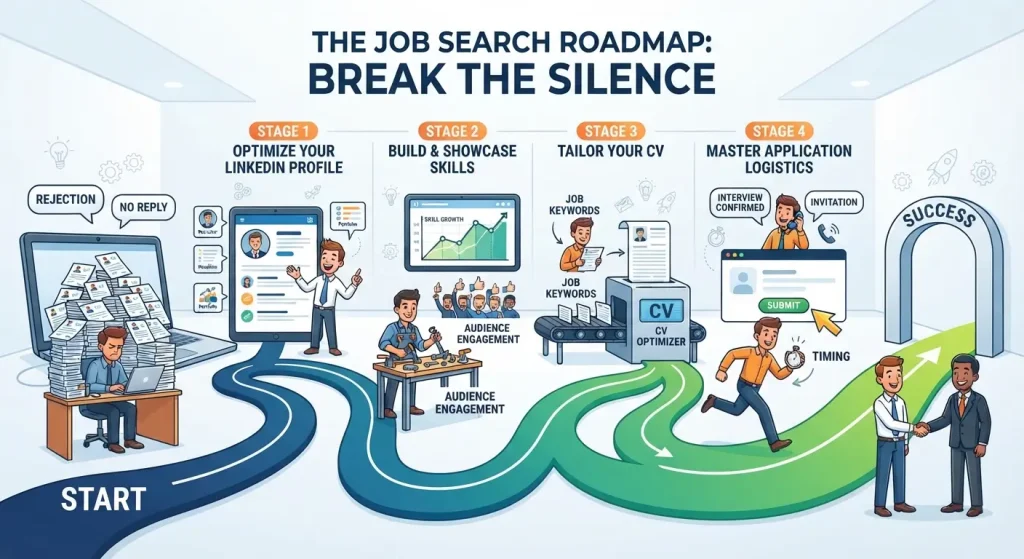
When you are sending out applications but hearing nothing back, it is a clear sign that your strategy needs to shift from a high-volume lottery to a high-impact presentation. This four-stage roadmap is designed to fix the friction points in your current approach.
Stage 1: Turn Your LinkedIn Profile into a Landing Page
Do not treat LinkedIn as an online storage room for your old CV. Treat it like a sales page where recruiters are the buyers.
- The 3-Second Headline Rule: Move away from generic job titles. Your headline should clearly state the specific problem you solve, the core tools you use to solve it, and the exact role you are targeting.
- Plant Searchable Triggers: Identify 3 to 5 job descriptions you actually want. Pull out the precise terminology and skills they repeat, then weave those exact terms into your About section and Experience bullet points. If recruiters use those words to find candidates, you need to match their search query.
- Quantify the Evidence: Erase vague descriptions like “Responsible for team management.” Replace them with raw impact: “Led a team of 4 to deliver project X two weeks ahead of schedule.” Numbers build immediate credibility.
Stage 2: Move Beyond Learning—Build and Broadcast
Possessing a skill in private does not help you get hired. In a competitive market, you must publicly prove your execution capabilities.
- Build an Evidence Portfolio: Move your work out of local folders. Host your code, designs, or case studies on public, accessible platforms. Link this tangible evidence directly to your profile.
- Document the Friction: Do not just post your final wins. Write about the bugs you broke, the complex problems you untangled, and the specific ways you upskilled. Showing how you think through a bottleneck tells a hiring manager you are resourceful.
- Claim Your Domain Space: Consistently share your perspective on industry shifts or workflows once a week. This regular activity signals to the platform’s algorithm—and to visiting recruiters—that you are an active, engaged professional in your field.
Stage 3: Hyper-Tailor Your CV
A universal, one-size-fits-all resume is a fast track to the rejection pile. Your document must look like it was custom-written for the single job you are applying to.
- Audit Before You Apply: Read the target job posting thoroughly. If the employer prioritizes a specific methodology, move your experience with that methodology to the very top of your CV.
- Mirror the Requirements: Ensure your resume structurally answers the specific pain points outlined in the job ad. If your CV doesn’t explicitly show how you fit their exact puzzle piece, the review process stops there.
Stage 4: Master the Logistics and Pace
How you submit your application tells an employer a lot about your attention to detail and professionalism.
- Act on Clean Windows: When an ideal role opens up, follow every instructed step immediately and precisely. Late or incomplete submissions signal a lack of enthusiasm or an inability to follow basic workflows.
- Treat the Application as a Process: Do not hit submit and walk away. Maintain a structured tracker of where you apply, follow up professionally when appropriate, and ensure your communication is crisp, punctual, and clean from the very first interaction.