
How to Land High-Paying Remote Tech Gigs from Nigeria Without a Local Degree in 2026
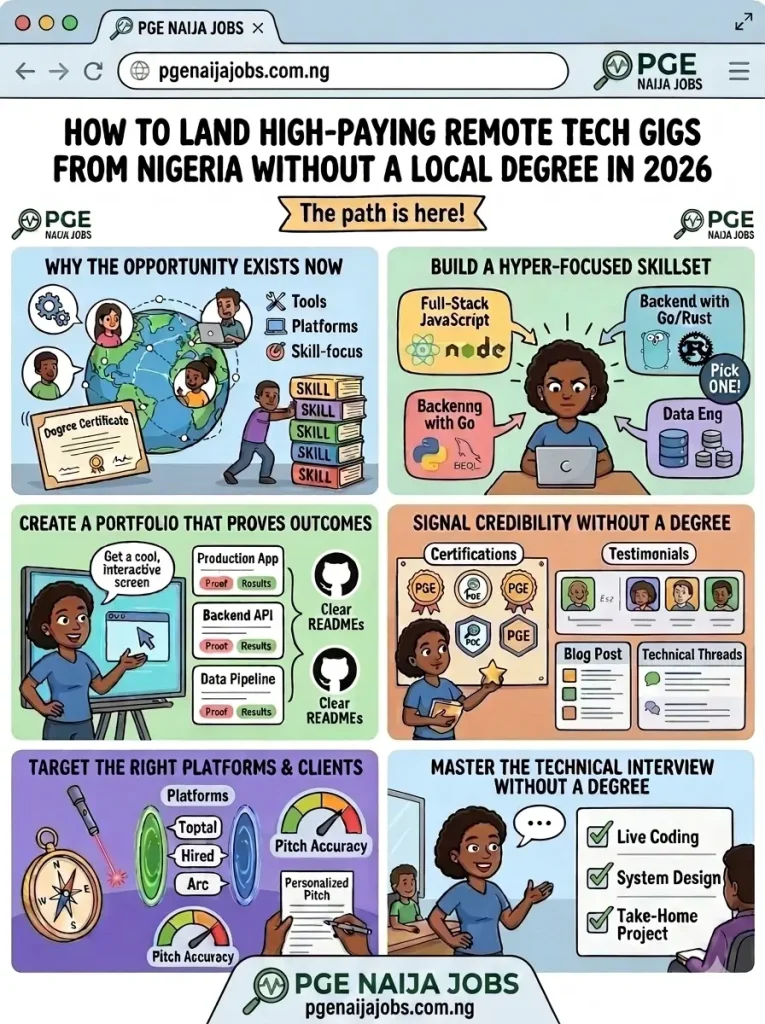
The old script that a local degree equals a good tech job no longer holds. Global companies hire talent by skill, portfolio, and problem solving. If you live in Nigeria and want top remote tech roles, this guide walks you through a practical step-by-step path that works in 2026.
Why the opportunity exists now
Remote-first companies need diverse talent and test for outcomes, not paper credentials. Tools, collaboration platforms, and skill-focused hiring have matured. That means a well-built portfolio and strong signals of competence can outcompete formal degrees.
Build a hyper-focused skillset
Identify a marketable niche that pays well and has remote demand: full stack JavaScript, backend with Go or Rust, cloud engineering on AWS/GCP, AI engineering, data engineering, or product design. Pick one core stack and master it deeply for 6 to 12 months with daily deliberate practice.
Follow modern learning paths: project-based courses, open source contributions, and coding challenges. Prioritize practical systems: APIs, authentication, testing, deployment pipelines, and observability. Employers look for people who can ship end-to-end solutions.
Create a portfolio that proves outcomes
A good portfolio shows projects that solved real problems and includes measurable results. Build 4 to 6 showcase projects: one production web app, one API or backend service, one automation or data pipeline, one code sample with tests, and one UI/UX prototype if relevant.
Host code on GitHub with clear READMEs, install steps, API docs, and demo links. Add short case studies for each project that state the problem, approach, tradeoffs, and impact. Record 2 to 3 short videos showing the app in use and the reasoning behind key decisions.
Signal credibility without a degree
Create credentials that translate globally. Contribute to reputable open source projects and get commits accepted. Earn recognized certifications selectively: cloud provider certifications, CI/CD badges, or machine learning certificates from respected institutions.
Collect testimonials from freelancers, volunteer projects, or pro bono work with local businesses. Put client results and metrics on your portfolio. Keep public activity: blog posts, technical threads, or YouTube walkthroughs that demonstrate domain expertise.
Target the right platforms and clients
Freelance marketplaces and remote job boards are different beasts. Use specialized platforms for high-paying work: Toptal, Hired, Gun.io, Arc, and well-vetted remote engineering roles on RemoteOK and WeWorkRemotely. For startups, use AngelList and YC job boards.
Apply strategically. Craft personalized pitches that reference the company, a likely technical risk, and how you would mitigate it. Lead with outcomes and relevant portfolio links. Quantity matters less than pitch accuracy and relevance.
Master the technical interview without a degree
Prepare three core interview tracks: live coding, system design, and take-home projects. For live coding, practice on platforms like LeetCode and CodeSignal but focus on practical problems tied to your stack. For system design, create diagrams, tradeoff summaries, and cost estimates.
When given take-home projects, treat them as sales opportunities. Ship a polished product with tests, docs, and a short video walkthrough. Explain tradeoffs and next steps in a README. Communicate progress proactively during the exercise.
Pricing and negotiation strategies
Research market rates for your role and adjust for experience, not location. Use salary calculators, recruiter feedback, and public pay data to set a target. When asked, provide ranges anchored to outcome-based value and comparable remote salaries.
Negotiate beyond base pay. Ask for equity, performance bonuses, sponsored training, and flexible schedules. If a client offers lower cash, propose a stepped increase tied to measurable milestones or a shorter trial period at market rate.
Payment, contracts, and legal practicalities from Nigeria
Choose reliable payment rails: Payoneer, Wise, and Stripe (where available) for freelancers. For full-time roles, request contracts with clear terms on currency, payment cadence, and termination clauses. Use simple but enforceable contracts from vetted templates.
Be aware of tax implications and local compliance. Keep records of invoices and contracts. Register a small business or sole proprietorship if it simplifies invoicing and banking. For high-value contracts, consider paid legal advice.
Build a network that opens doors
Network with peers in focused channels: Discord servers, specialized Slack communities, Twitter threads, and GitHub organizations. Attend virtual meetups, hackathons, and sponsor or speak at local tech events to increase visibility.
Reach out to alumni, ex-colleagues, and hiring managers with concise messages that highlight specific shared context or mutual connections. Offer value first: a code review, a small contribution, or insights from a recent project.
Scale from single gigs to steady high-paying roles
Start with freelance or contract roles to build references. Use each successful project as a case study for future pitches. After 6 to 12 months of consistent wins, transition to higher-trust engagements: part-time remote roles, contractor-to-hire paths, or direct full-time remote positions.
Automate visibility. Keep a weekly publishing cadence: one demo, one short technical post, and two outreach messages. Small consistent actions compound and create momentum.
Sample 90-day action plan
Days 1 to 30: Pick a niche, build one polished project, and publish a public GitHub repo with README and demo. Start applying to three targeted roles per week.
Days 31 to 60: Contribute to one open source project, make 10 personalized pitches, and record two short walkthrough videos. Begin interviews and refine your pitch.
Days 61 to 90: Land a paid trial or freelance contract. Negotiate terms, collect testimonials, and document outcomes. Use revenue to invest in a premium course or paid certification.
Real-world mindset and soft skills
High-paying remote roles reward reliability, clarity, and asynchronous communication. Be explicit about timelines, blockers, and tradeoffs in written updates. Learn to write concise design notes and status reports.
Develop cultural awareness for global teams. Be proactive, ask clarifying questions, and own solutions. The confidence to admit uncertainty and propose experiments often separates good engineers from great hires.
Final thought
A local degree is no longer the single gatekeeper to top remote tech work. With focused skills, a results-driven portfolio, smart networking, and contract savvy, Nigerian professionals can compete globally for high-paying roles in 2026 and beyond. Start with one strong project, and let consistent delivery build the rest.