
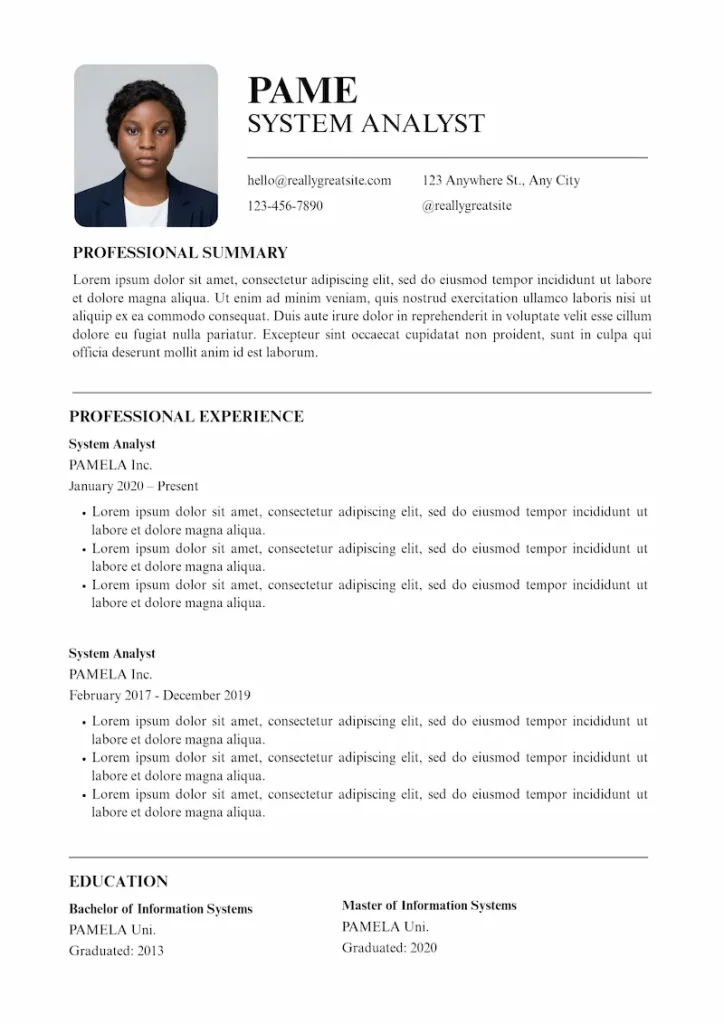
Example of a professional CV layout used to demonstrate ATS-friendly formatting and keyword placement tips
If you’ve been applying for jobs lately and feel like your resume is disappearing into a black hole, you aren’t crazy. It’s likely the ATS (Applicant Tracking System).
In 2026, these systems are smarter than ever. They don’t just “read” your resume; they rank it. If the software doesn’t see what it’s looking for, a human recruiter will never even see your name.
Here is how to make sure your resume actually makes it to a real person’s desk.
1. Stop Using Fancy Graphics
I know, those Canva templates with the colorful bars and two-column layouts look great. But here’s the truth: ATS bots hate them. Many systems still struggle to read text inside text boxes or complex graphics.
•The Fix:
Stick to a clean, single-column layout. Use standard fonts like Arial or Calibri. Keep it simple so the bot can actually read your experience.
2. Keywords Aren’t “Cheating” They’re Required
The ATS works like a search engine. If a recruiter is looking for a “Project Manager” with “Python” skills, and those exact words aren’t on your resume, you’re invisible.
•The Fix:
Read the job description carefully. Pick out the specific skills they mention most. If they call it “Customer Success” instead of “Customer Service,” change your resume to match their wording.
3. Focus on “Results,” Not Just “Duties”
In 2026, bots are trained to look for impact. Don’t just say you “managed a team.” That’s vague.
•The Fix:
Use numbers. “Managed a team of 10 and increased sales by 20% over 6 months.” Numbers stand out to both the software and the recruiter who eventually reads it.
4. Use Standard Section Headers
This isn’t the place to get creative. If you label your work history as “My Professional Journey,” the ATS might not realize it’s looking at your experience.
•The Fix:
Stick to the classics: Work Experience, Education, and Skills. It makes the bot’s job easier, which makes your life easier.
5. The “Skills” Section is Your Secret Weapon
Don’t just bury your talents inside long paragraphs. Have a dedicated “Core Competencies” or “Technical Skills” section near the top. This is where you can pack in those high-value keywords like Data Analysis, Remote Collaboration, or Agile Methodology.
The bottom line? You are writing for a robot first and a human second. Once you get past the robot, your personality can shine in the interview.
Looking for a new role? [Check out our latest job listings on PGENAIJA Jobs here: https://pgenaijajobs.com.ng/ PGE Remote Hub here: https://pge-remotehub.oru.club/]